Language model
General capability: interpret, generate, reason and assist.
Power without a production system02Factories
Each factory owns a defined business domain. Together they form a controlled flow from finding work, through delivery, to enterprise and board oversight.
Why we call them factories / Engine to operating system
The steam engine was a remarkable source of general-purpose mechanical power. Its larger economic effect came when that power was organised inside factories: connected to tools, people, materials and repeatable methods of production.
We use the same distinction for large language models. A model is an engine of general capability. A factory is the runtime around it—the processes, tools, permissions, information, checkpoints and evidence that turn capability into dependable business work.
Some people call this a runtime, an engine or an agent system. We call it a factory because the useful unit is not the model alone. It is the complete operating environment designed around a defined body of work.
General capability: interpret, generate, reason and assist.
Power without a production systemDefined inputs, tools, permissions, repeatable tasks, controls and evidence.
Capability made operationalWorker roles perform bounded tasks. Manager roles coordinate, route and escalate.
Roles inside the factory—not new authorityFactory landscape / One operating flow
Signal / Available
Coordinates controlled marketing operations and qualified lead handoff.
Approved material, tracking context and a clear opportunity handoff.
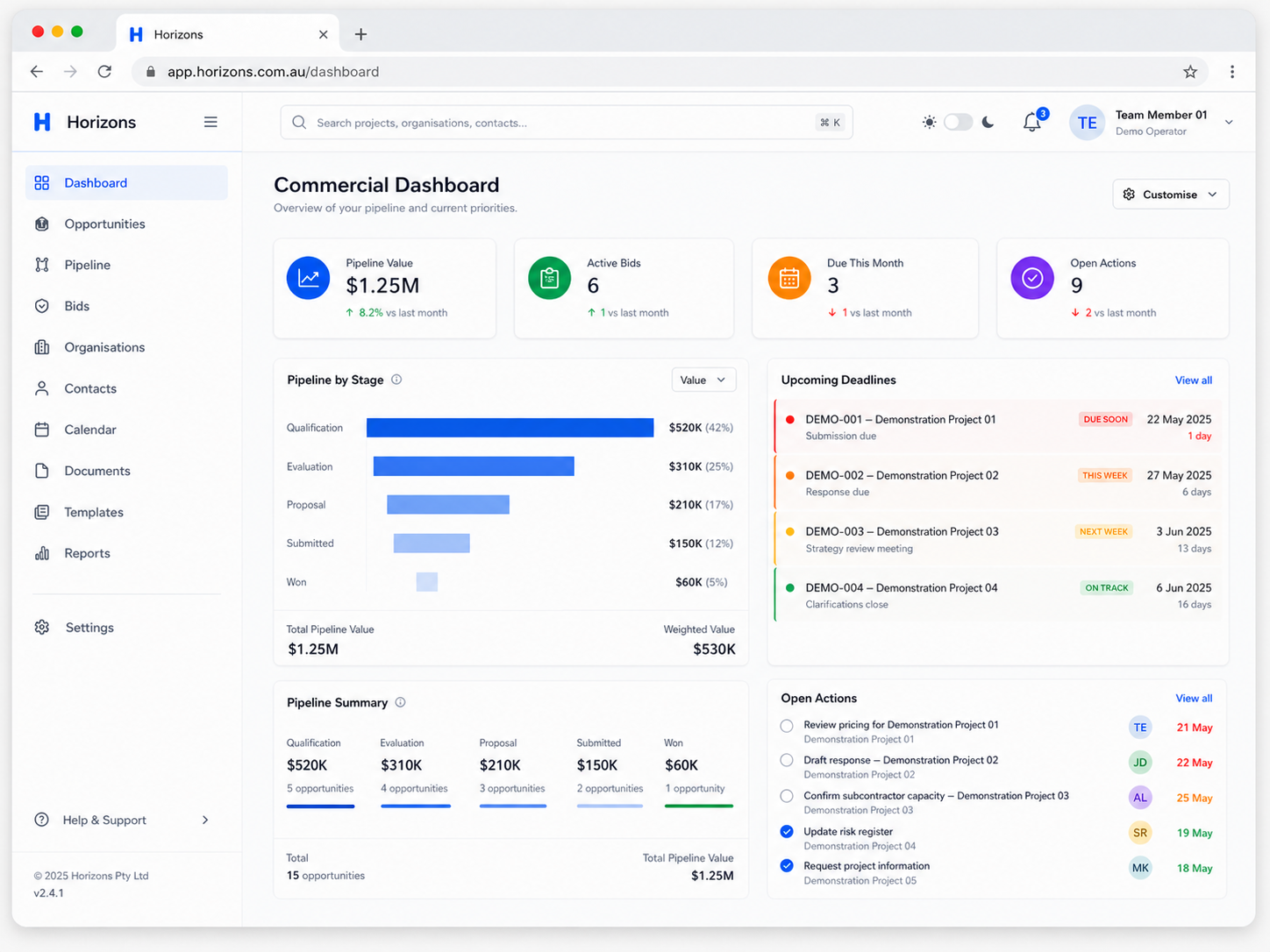
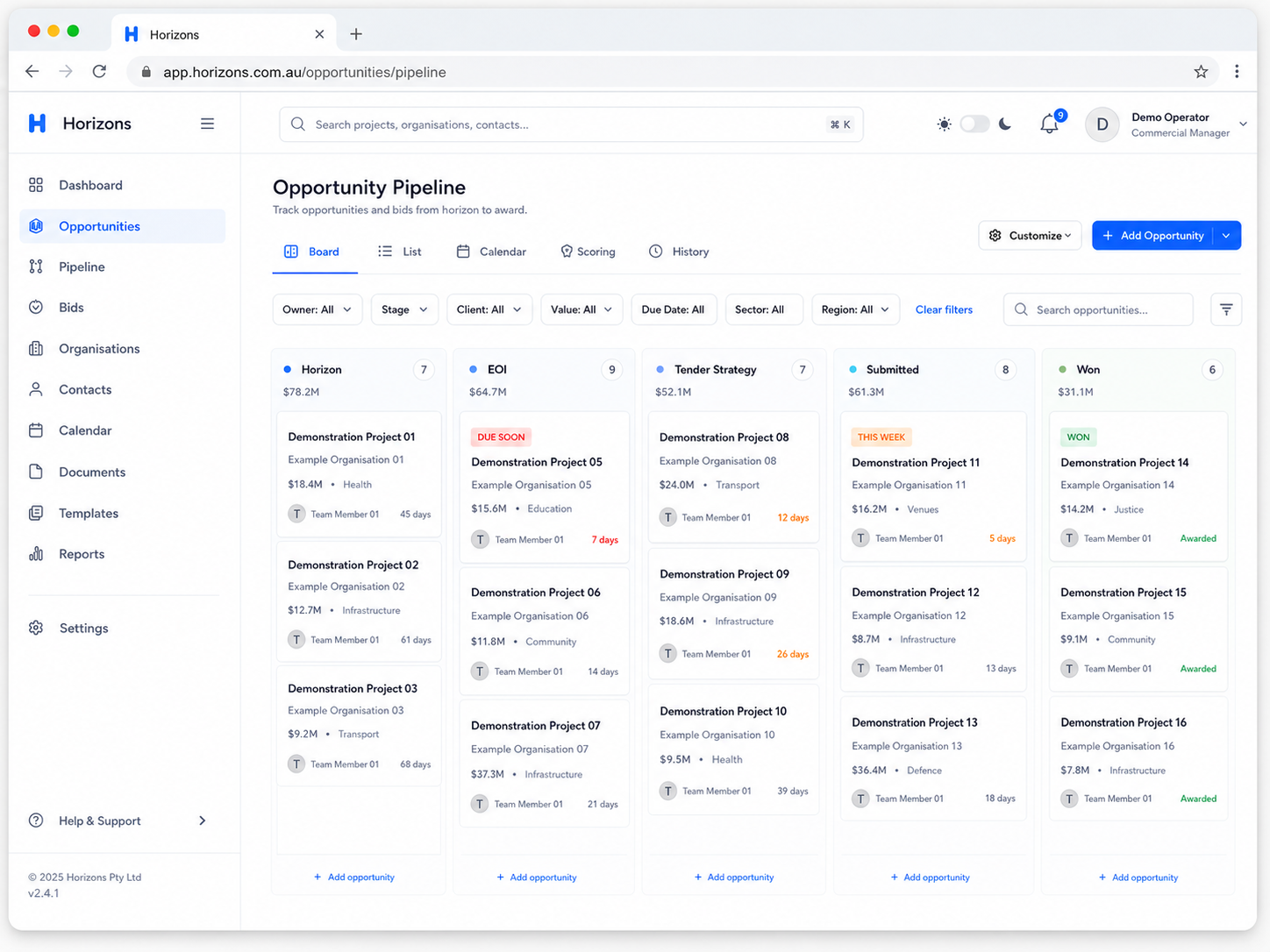
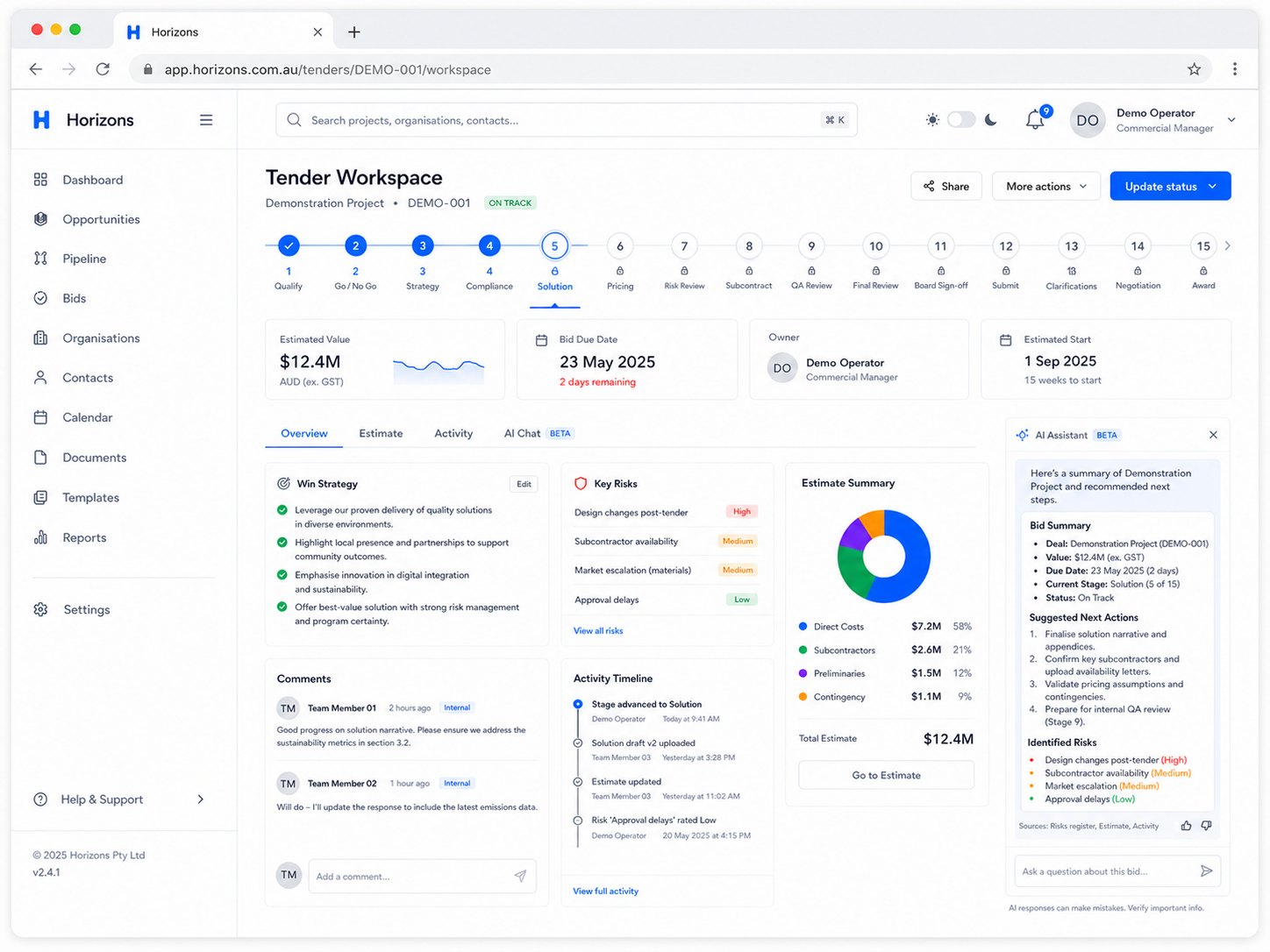
Horizons / Available
Carries an opportunity from relationship and assessment through tender and award readiness.
A controlled opportunity record, review gates and an approved delivery handoff.
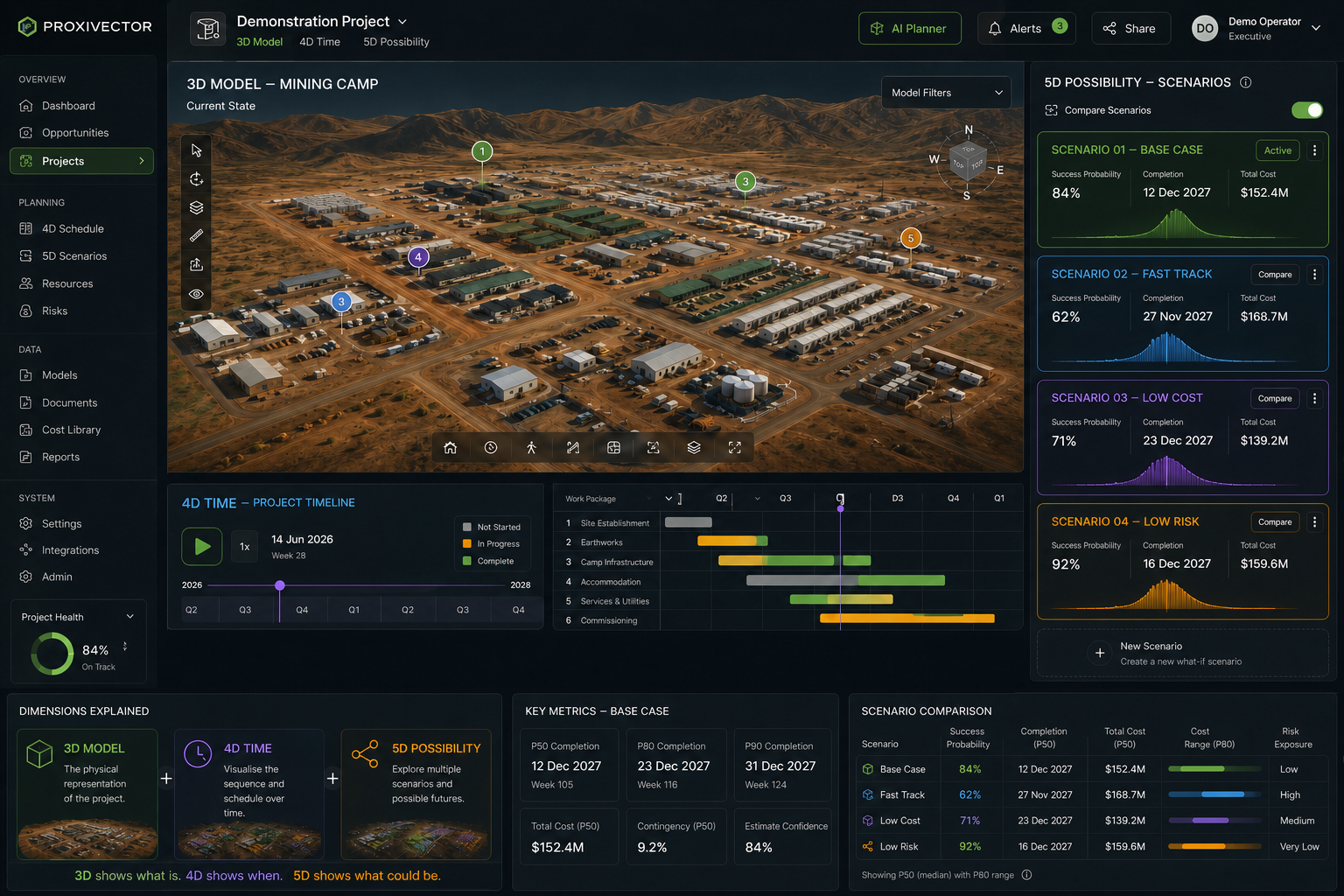
ProxiVector / Available
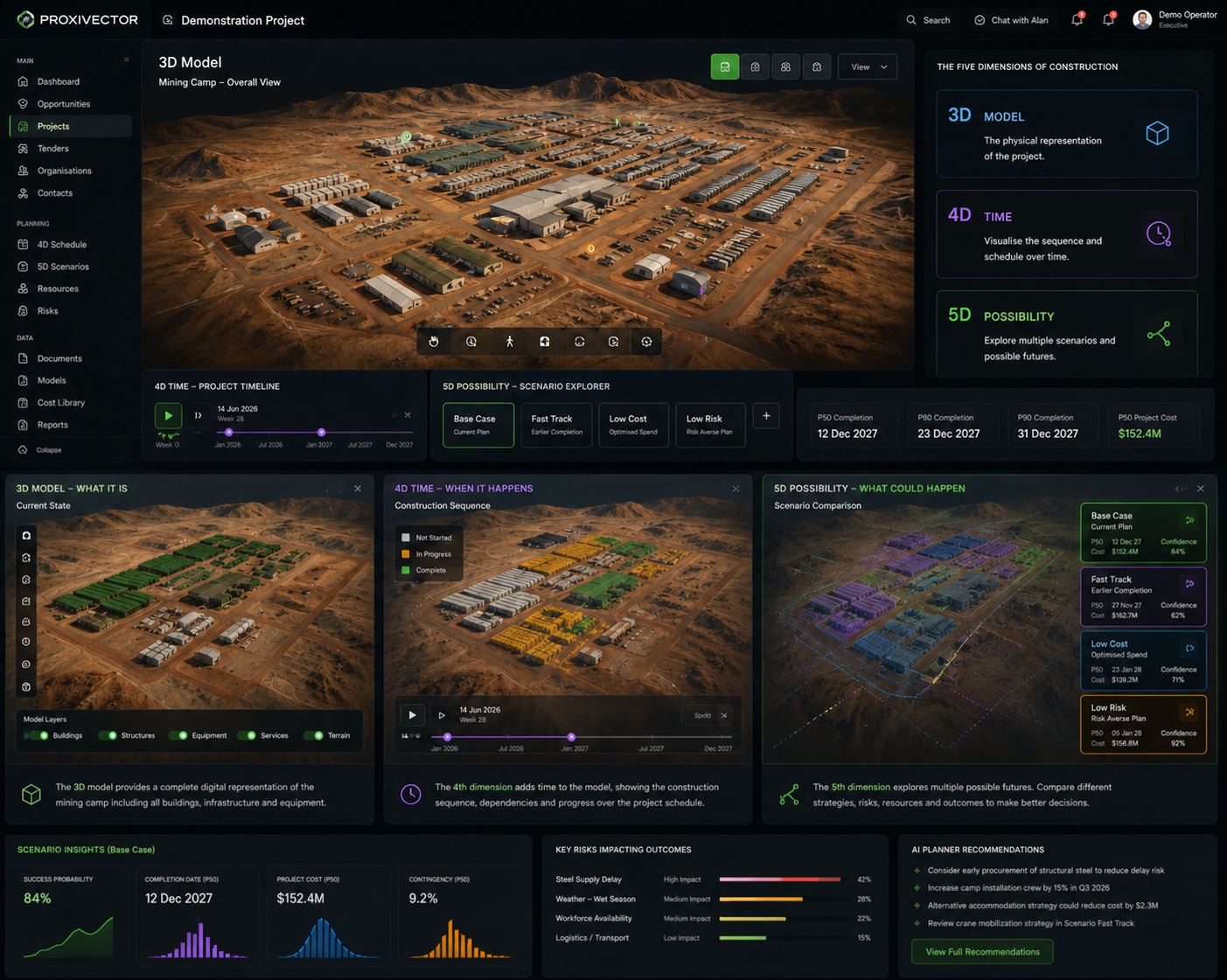
Models methodology, sequence, resources and constraints before delivery decisions are made.
Comparable scenarios and planning intelligence with visible assumptions.
Frontline / Available
Provides focused, mobile workflows for people performing work in the field.
Safety, quality and delivery evidence captured where the work occurs.
Hub / Available
Coordinates detailed project operations, registers, documents and evidence.
A shared operational picture for project teams and managers.
PMS / Available
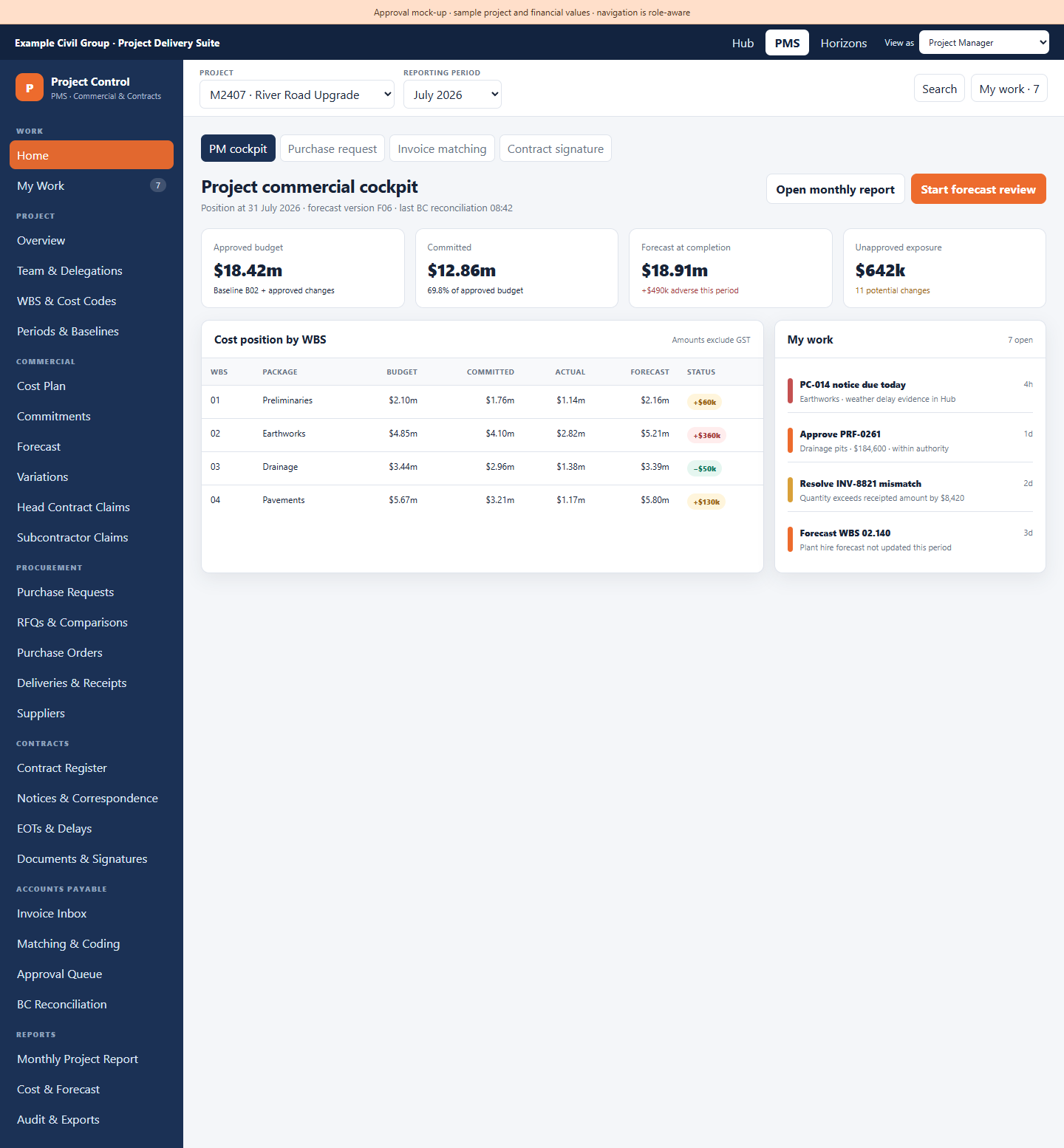
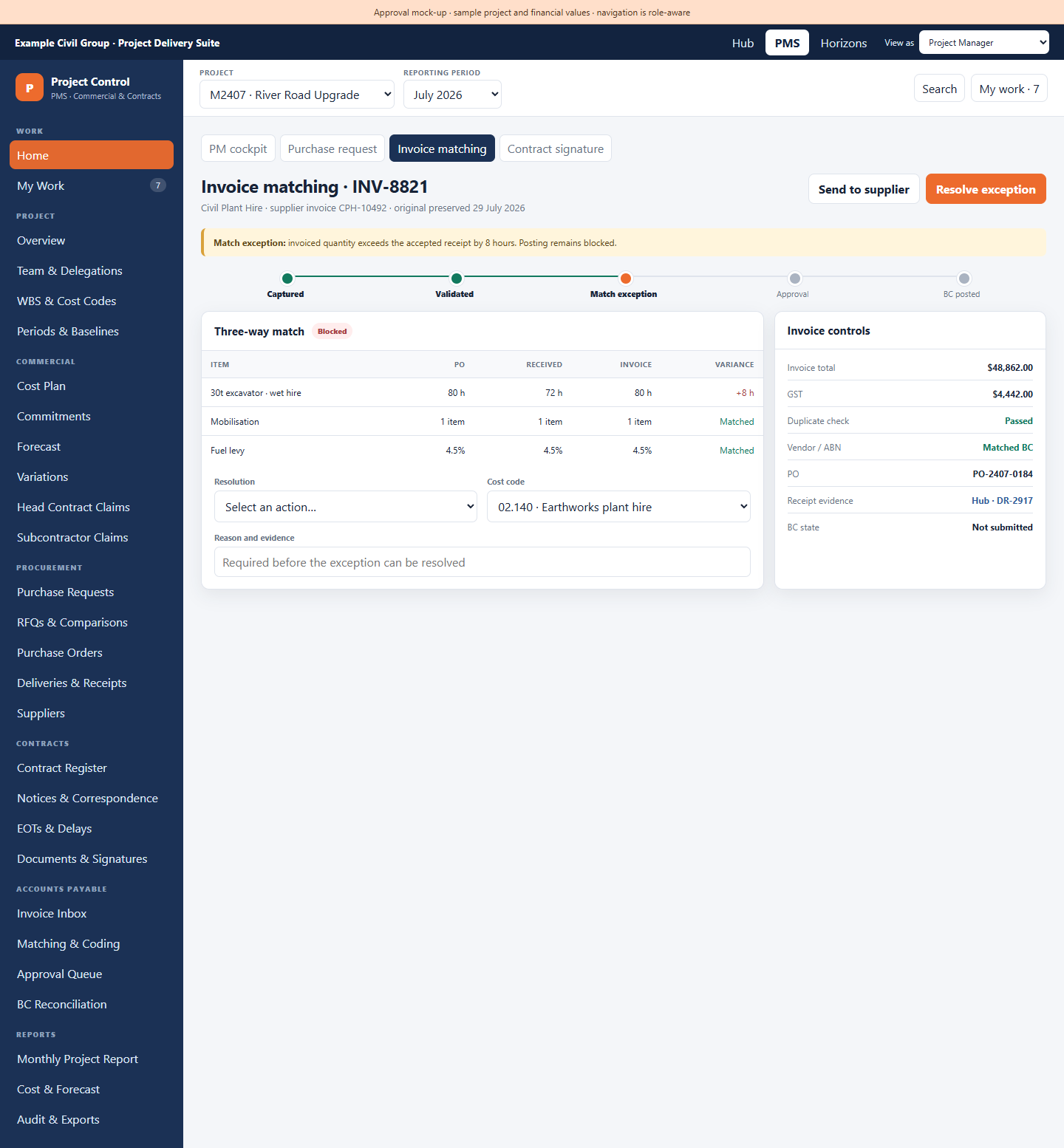
Maintains restricted project-commercial and contract workflows.
Controlled costs, commitments, claims, procurement and delegated approvals.
Bunker / Available
Brings cross-project and cross-function information to enterprise management.
Business-wide performance, ownership and exception visibility.
CrowsNest / Available
Presents strategic direction, assurance and material matters for formal oversight.
Traceable board decisions and an appropriate view of enterprise performance.
Authoritative boundaries
The stack integrates with enterprise systems without becoming another version of their records. Technical implementation and internal data contracts remain private.
Authoritative financial records remain in the organisation’s financial platform.
Employment and protected workforce records remain in the organisation’s people platform.
Ki’s private technical infrastructure. Its central IT support and development register integration is planned, not active.
Follow how people, tools, factories and governance fit together.